Not standing up — a standard container door opening is about 2,280 mm. Tall steel cabinets travel lying down on a full-length skid, fully assembled, with the doors flat-packed. Here are the real numbers.
A 20 ft or 40 ft container is about 2,393 mm high inside, but the door opening is only about 2,280 mm. A 40 ft high-cube gives 2,695 mm inside and about 2,585 mm at the door. So a 2,400–2,500 mm cabinet that we can build without difficulty will not go in standing up.

Tall units travel on their back, fully assembled, on a skid running the full length of the cabinet. The doors come off and are packed flat inside the crate, so nothing point-loads a 2,400 mm panel. Nothing is stacked on top of a tall unit.
For very tall runs there is a second option: the cabinet is built in two sections and stacked on site with concealed connectors, so the joint lands on a door line instead of a splice. Send us the ceiling height and we will say which of the two suits your wall.

You approve at every gate. Nothing is cut before the drawing is signed off, and the render and the technical drawing cost you nothing.
Send a sketch, a measured layout or a reference photo. Sizes, drawer counts, colour, locks and casters.
We build a virtual scene image of the cabinet before anything is made, so you can see the proportions.
The layout is locked and issued as a formal DXF / PDF drawing with dimensions, steel gauge and bill of materials.
One sample unit is built and photographed, or shipped, for your final approval.
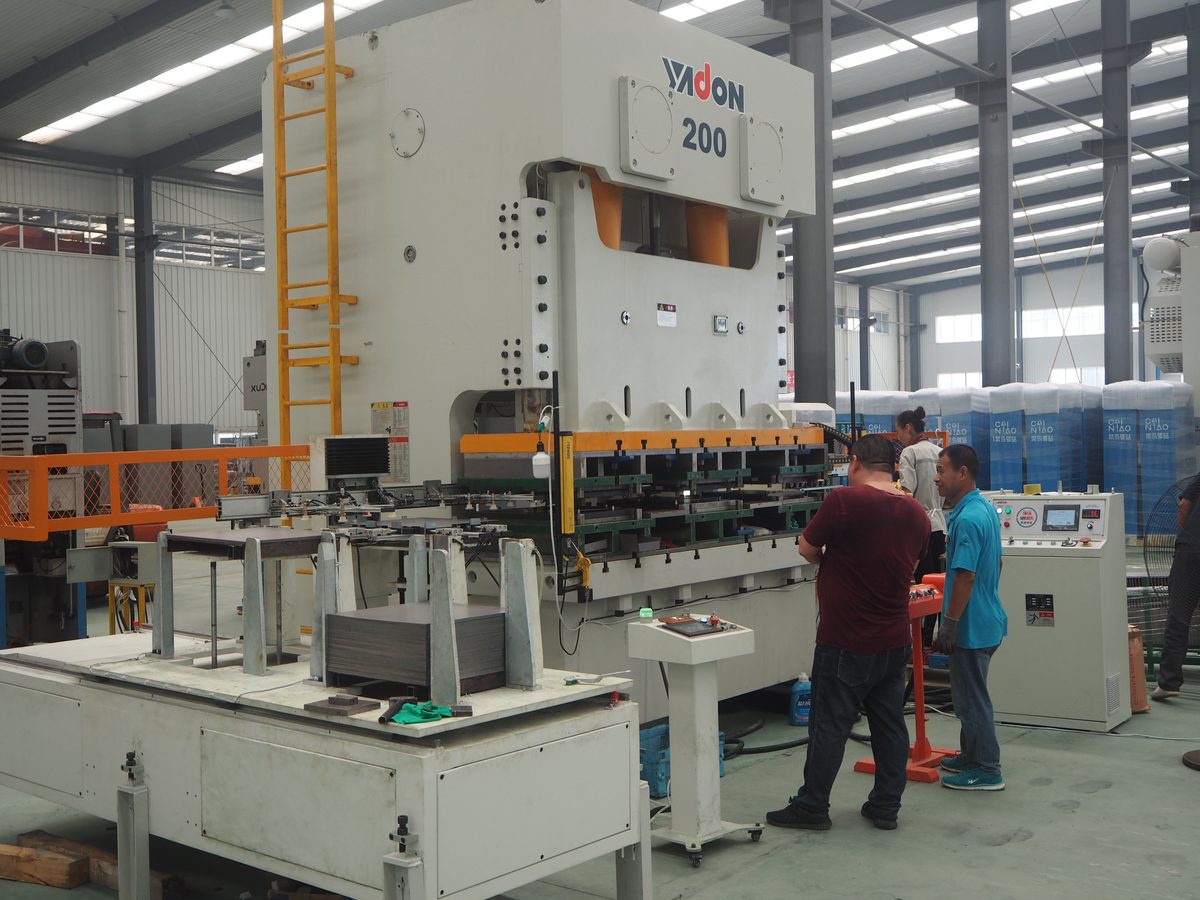
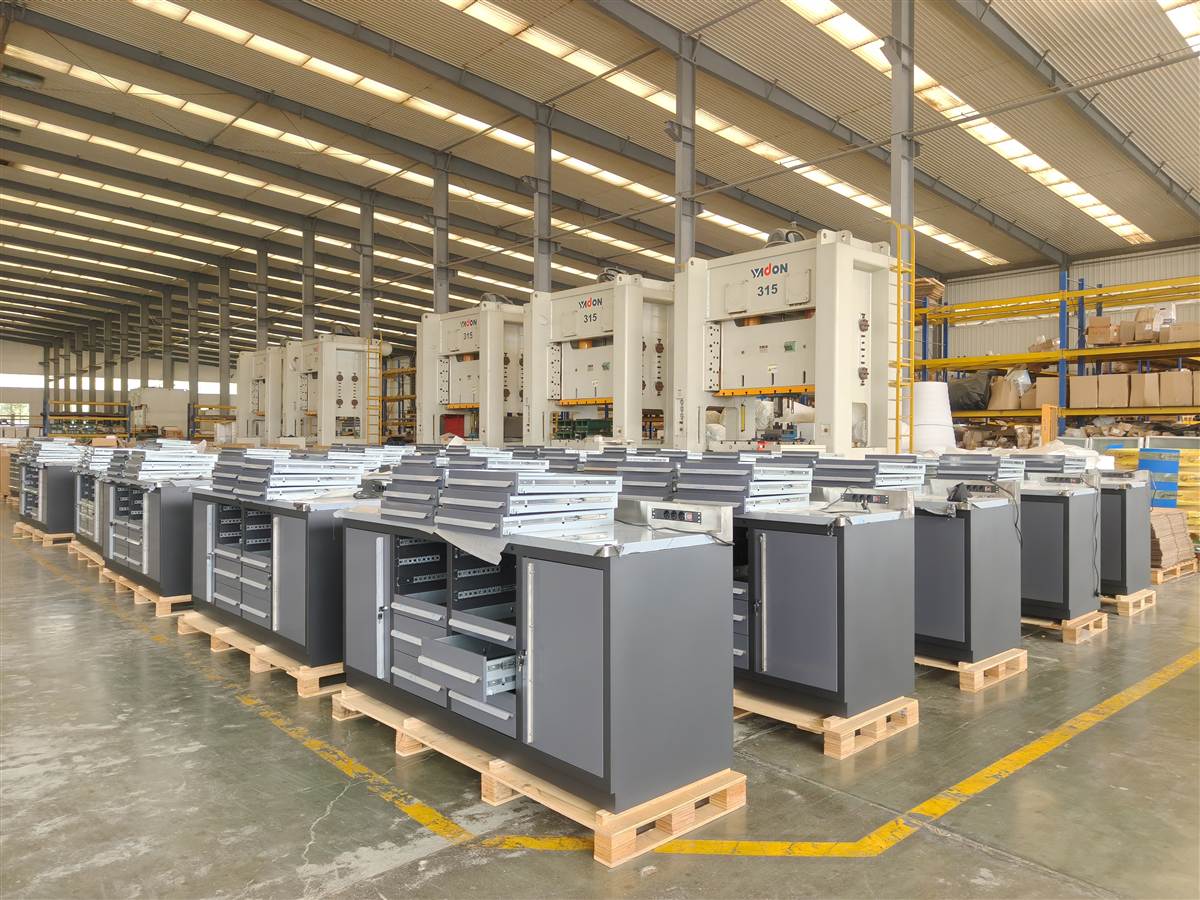
Punch, bend, weld, powder-coat and assemble on the line, with photo updates at the key stages.
Pre-shipment inspection against the confirmed drawing, then export packing and container loading.
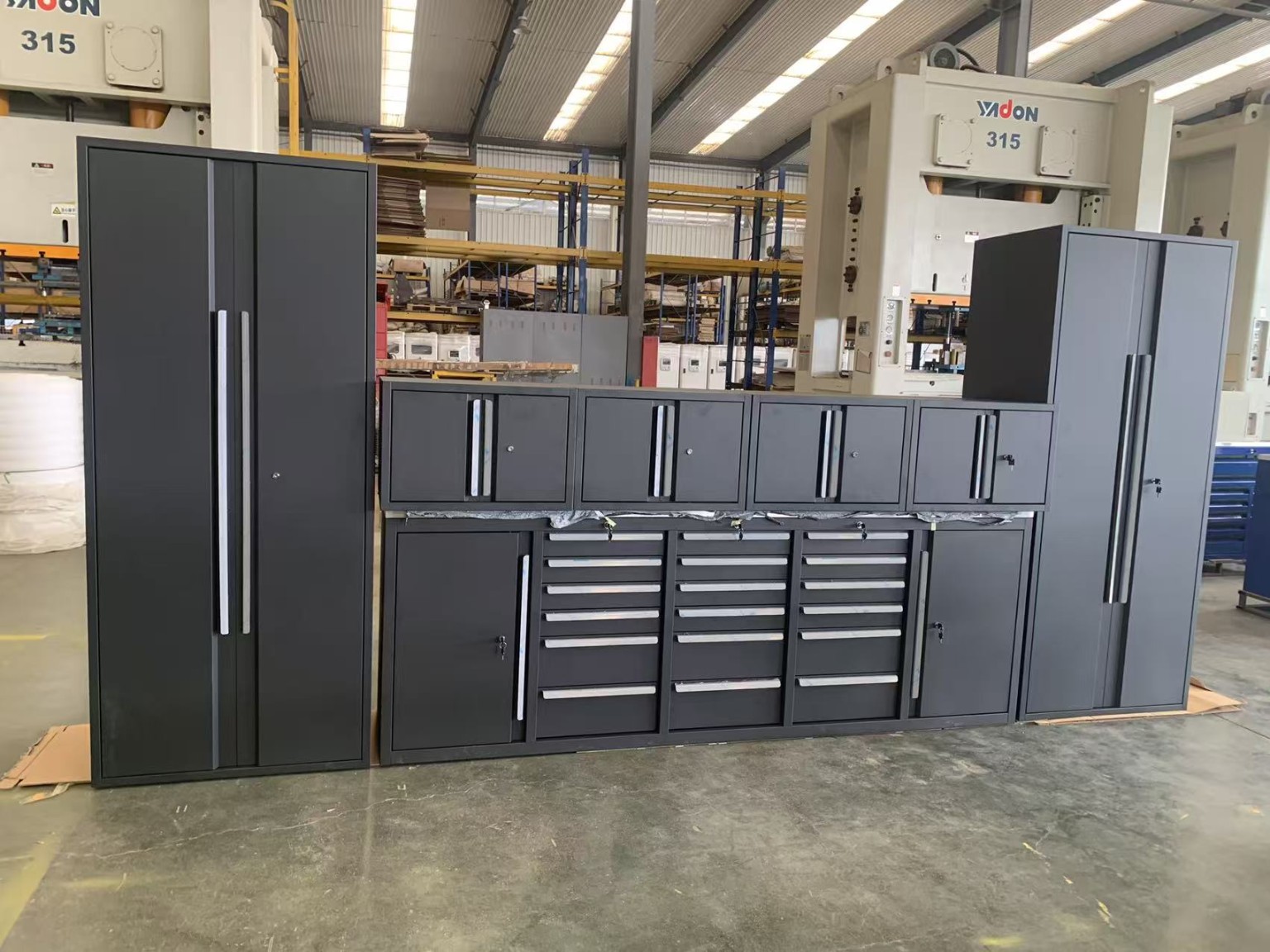
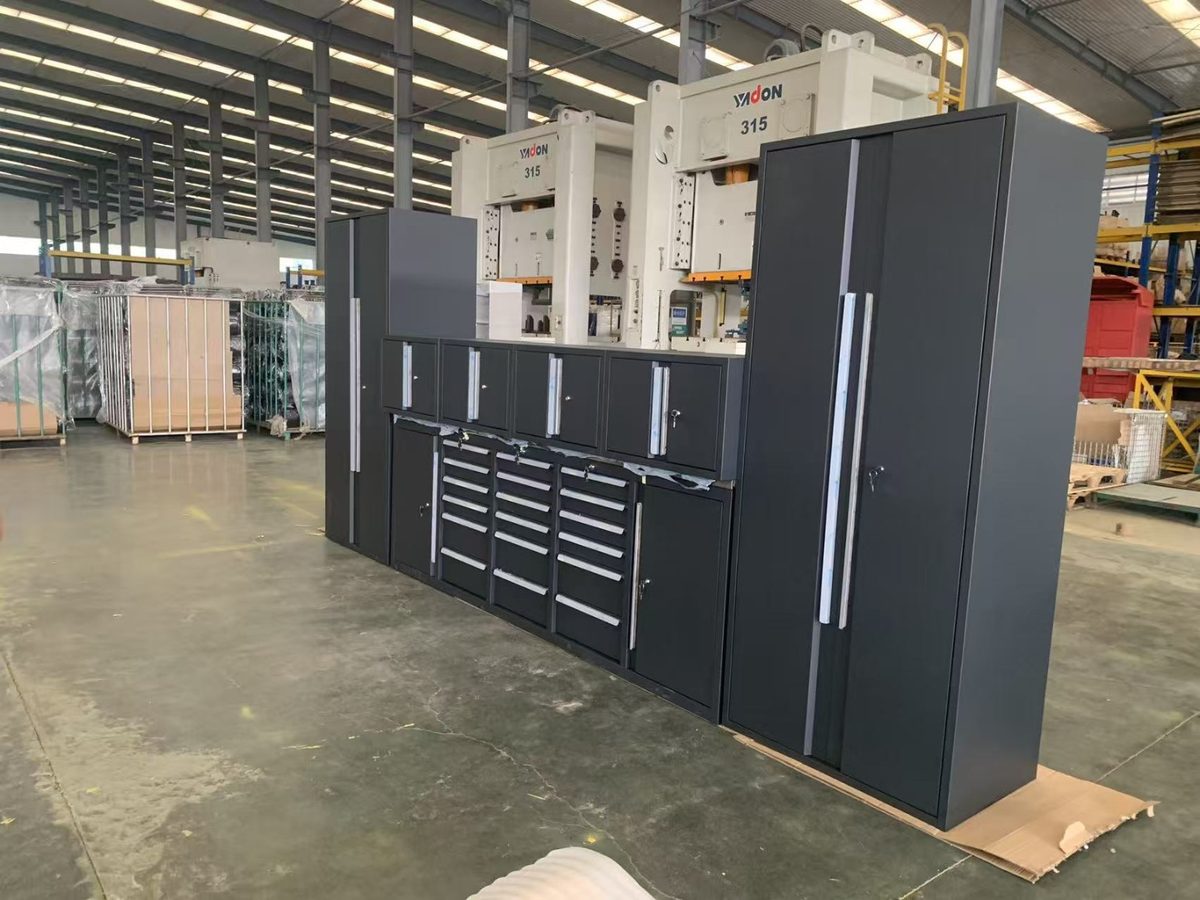
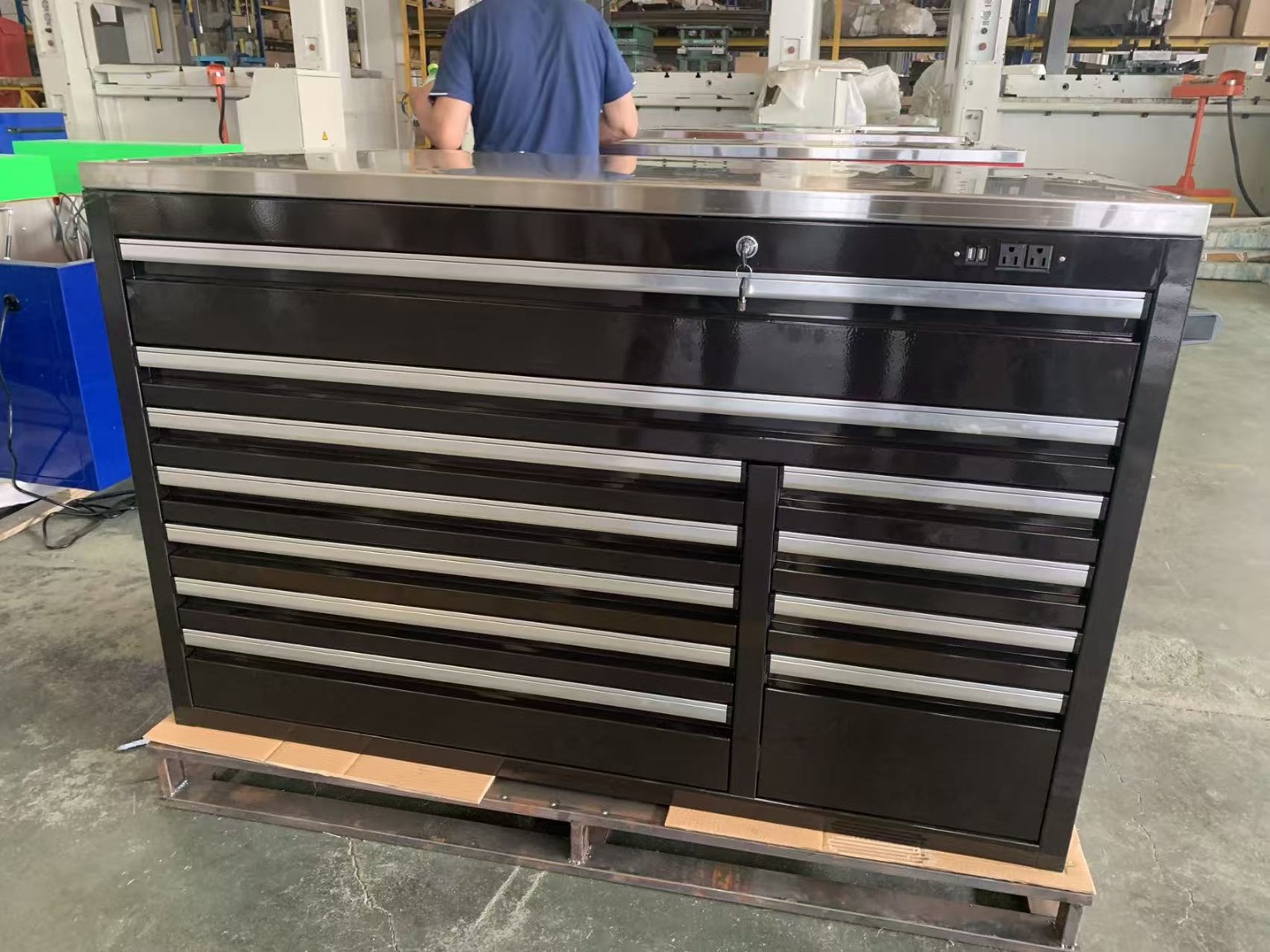
Units built on the Qingdao line — not stock photography. Bring your own drawing or a reference photo and it will be built to that.


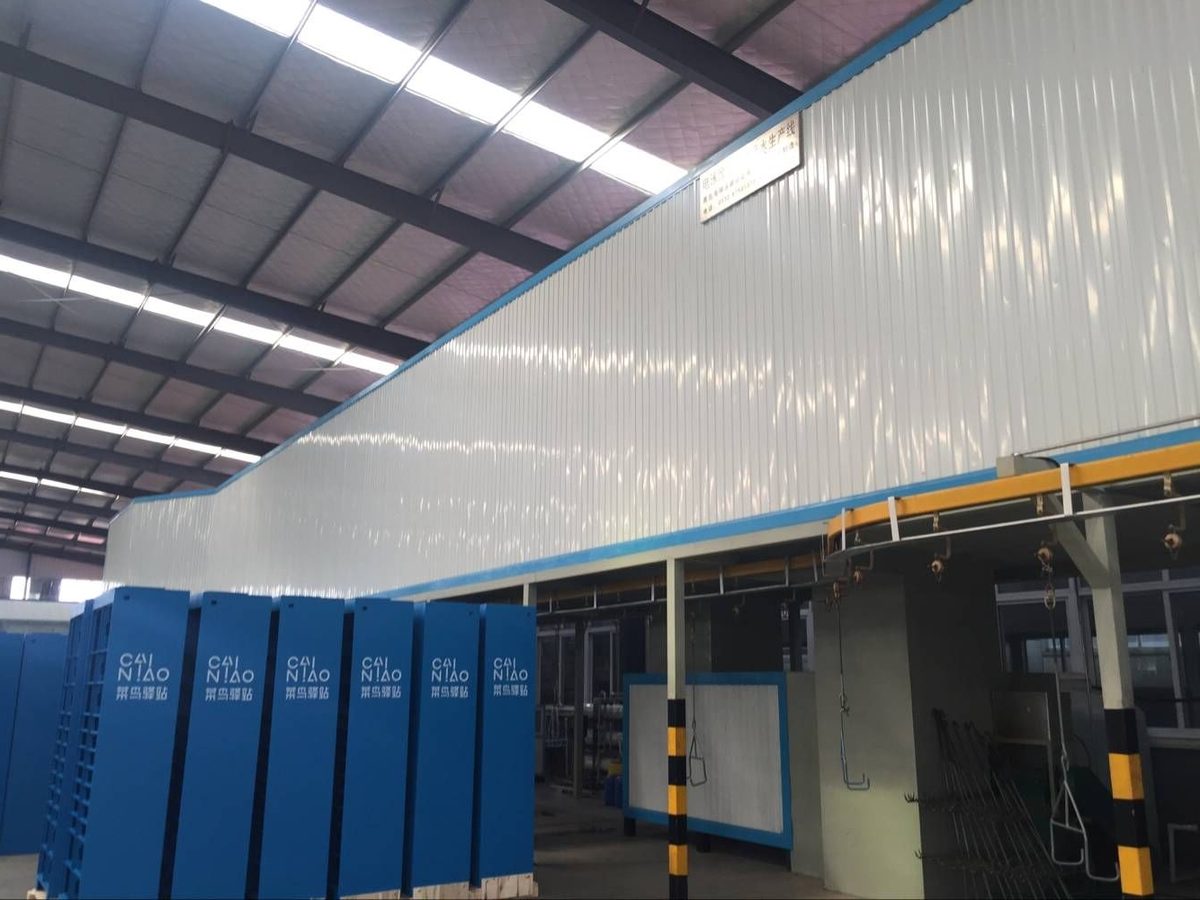
Our factory holds IATF 16949:2016 — the automotive quality system — and produces stamped and welded metal parts with electrophoretic and spray coating for a German premium car maker. The same plant, the same stamping, welding and coating processes go into your cabinets. The certificate is in cycle 3 and runs to July 2029.
It is the safer way to move a 2,400 mm unit, provided three things are right: the carcass lies on its back rather than on the door face, the skid runs the full length so the middle cannot sag, and the doors are packed separately. We treat bracing as part of the drawing, not as an afterthought at the packing bench.
Yes, and for some walls that is the better answer. Two sections of about 1,200 mm each are lighter to handle on site and far below any door limit; the joint is designed onto a door line with concealed connectors so the finished face reads as one cabinet. It is a design choice, decided with you before the drawing is frozen.
Not necessarily. A single wall run is usually 8–9 m³ of crated parts, and a 20 ft container holds about 33 m³, so one set fills roughly a quarter of it. For smaller volumes LCL is normal; the deciding factor is usually the destination charges rather than the ocean freight.
FOB Qingdao is our published term: you nominate the forwarder and we deliver into their hands at Qingdao. Other terms are quoted per project.
3D render and technical drawing: 2 working days each (free). Sample: 7-10 days. Mass production: about 30 days. Total from inquiry to container shipment: 30-45 days.
Send a drawing, a rough sketch or a photo of what you need. Tell us the destination port and the quantity you have in mind — you get a firm number, a lead time and photos of comparable builds.