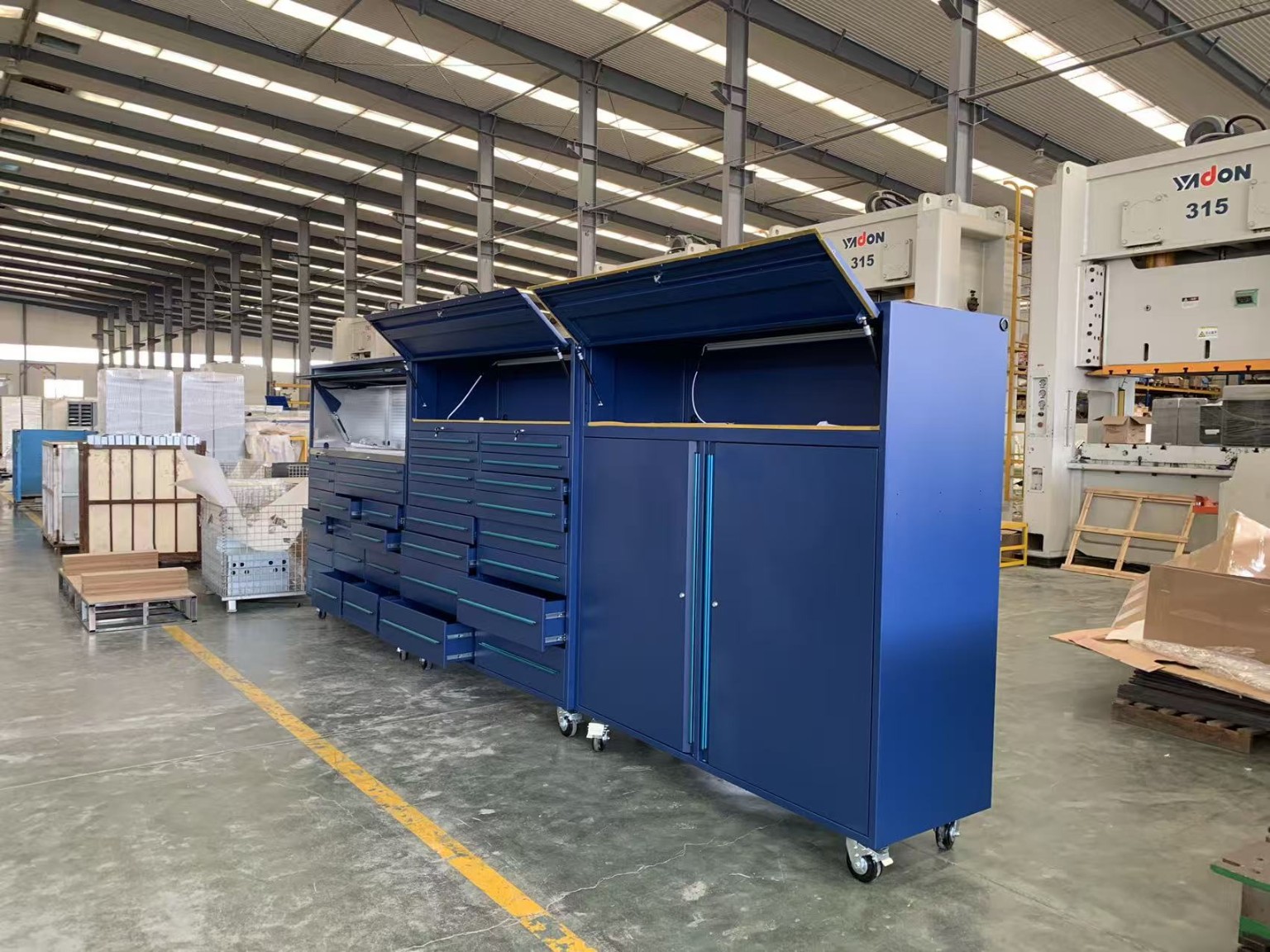
At 2,400 mm, 1.2 mm cold-rolled steel is the minimum that stays rigid — and that puts a full-height leaf at roughly 25 to 30 kg. Here is the arithmetic, and the two ways to handle it.
Door panels look like flat sheets, but on a tall cabinet they behave like beams. At 2,400 mm, a 0.6–0.8 mm skin twists as soon as you pull one corner, and the load goes into the hinges instead of the panel.

Cold-rolled steel at 1.2 mm is 9.42 kg per square metre. A 450 × 2,450 mm leaf is a little over 1.1 m² per face — and a door is two faces, plus the folded perimeter, the stiffening ribs, the hinges and the lock rod. Those extras are usually forgotten and they are 15–20% of the weight.

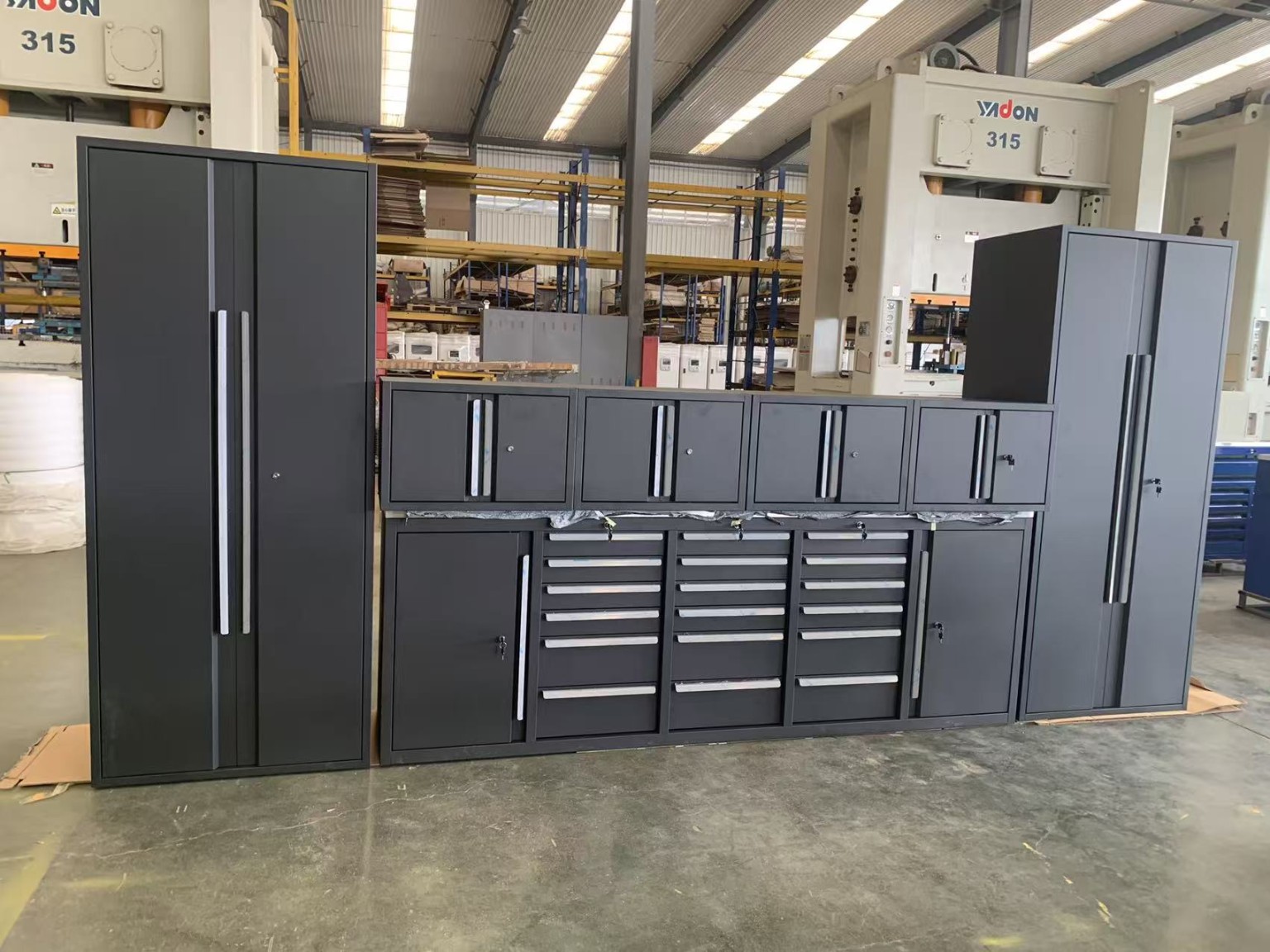
Keeping the full-height door means 4–5 heavy-duty hinges per leaf with reinforced hinge plates. Splitting the door plane into an upper and a lower pair, with the joint landing on a shelf line, drops each leaf to about 16 kg — easier to hang, far less load on the hinges over the years, and from the front it still reads as a tall cupboard.
Neither version changes the carcass: it stays one welded piece either way.

You approve at every gate. Nothing is cut before the drawing is signed off, and the render and the technical drawing cost you nothing.
Send a sketch, a measured layout or a reference photo. Sizes, drawer counts, colour, locks and casters.
We build a virtual scene image of the cabinet before anything is made, so you can see the proportions.
The layout is locked and issued as a formal DXF / PDF drawing with dimensions, steel gauge and bill of materials.
One sample unit is built and photographed, or shipped, for your final approval.
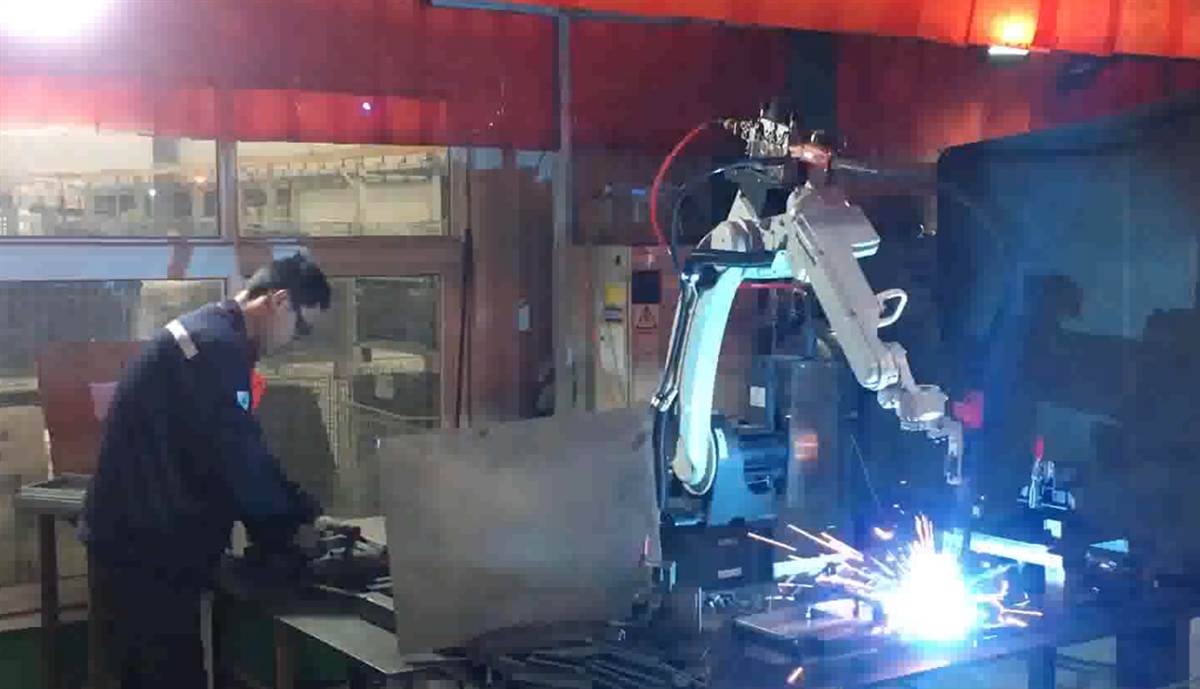
Punch, bend, weld, powder-coat and assemble on the line, with photo updates at the key stages.
Pre-shipment inspection against the confirmed drawing, then export packing and container loading.
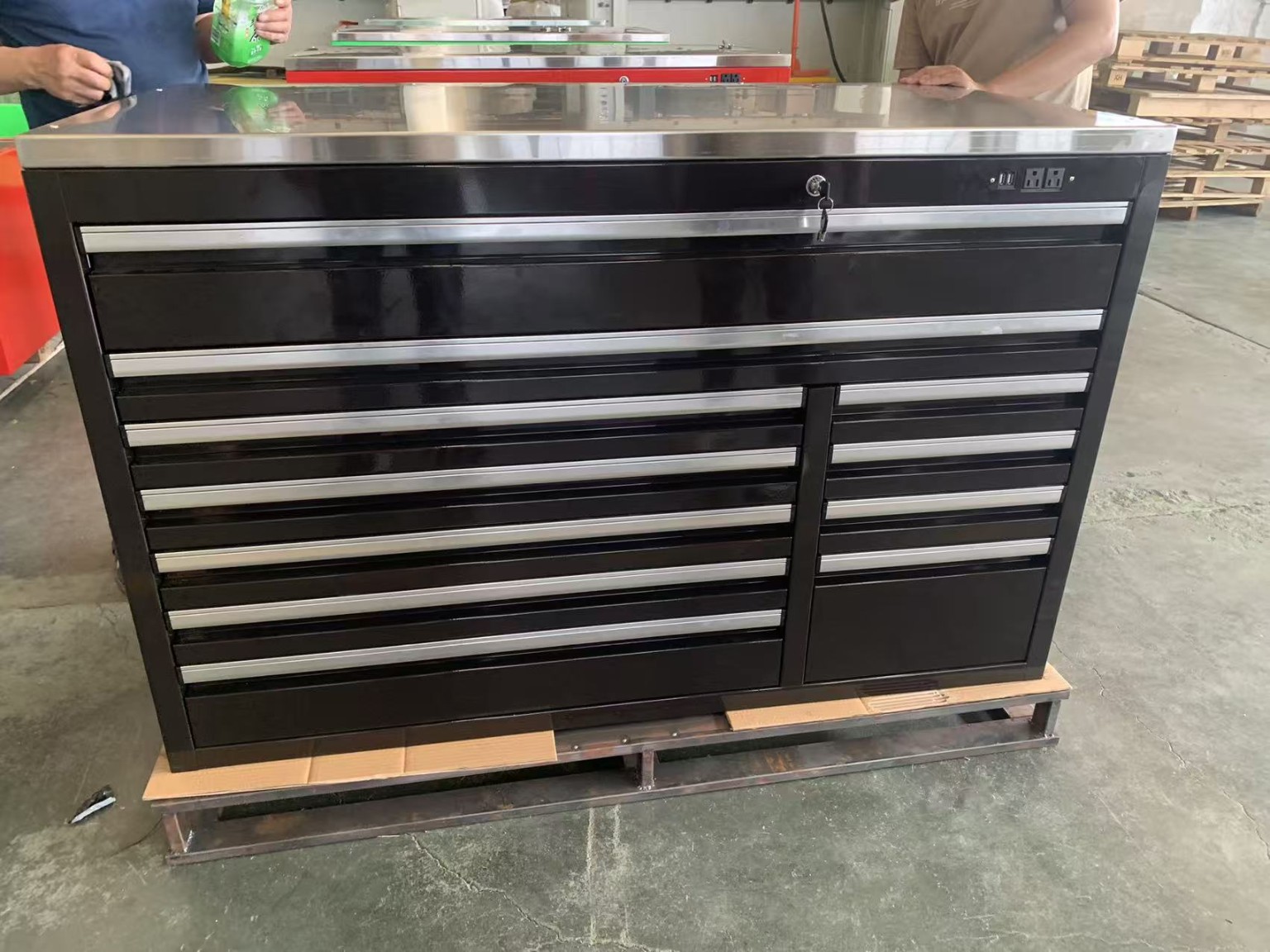
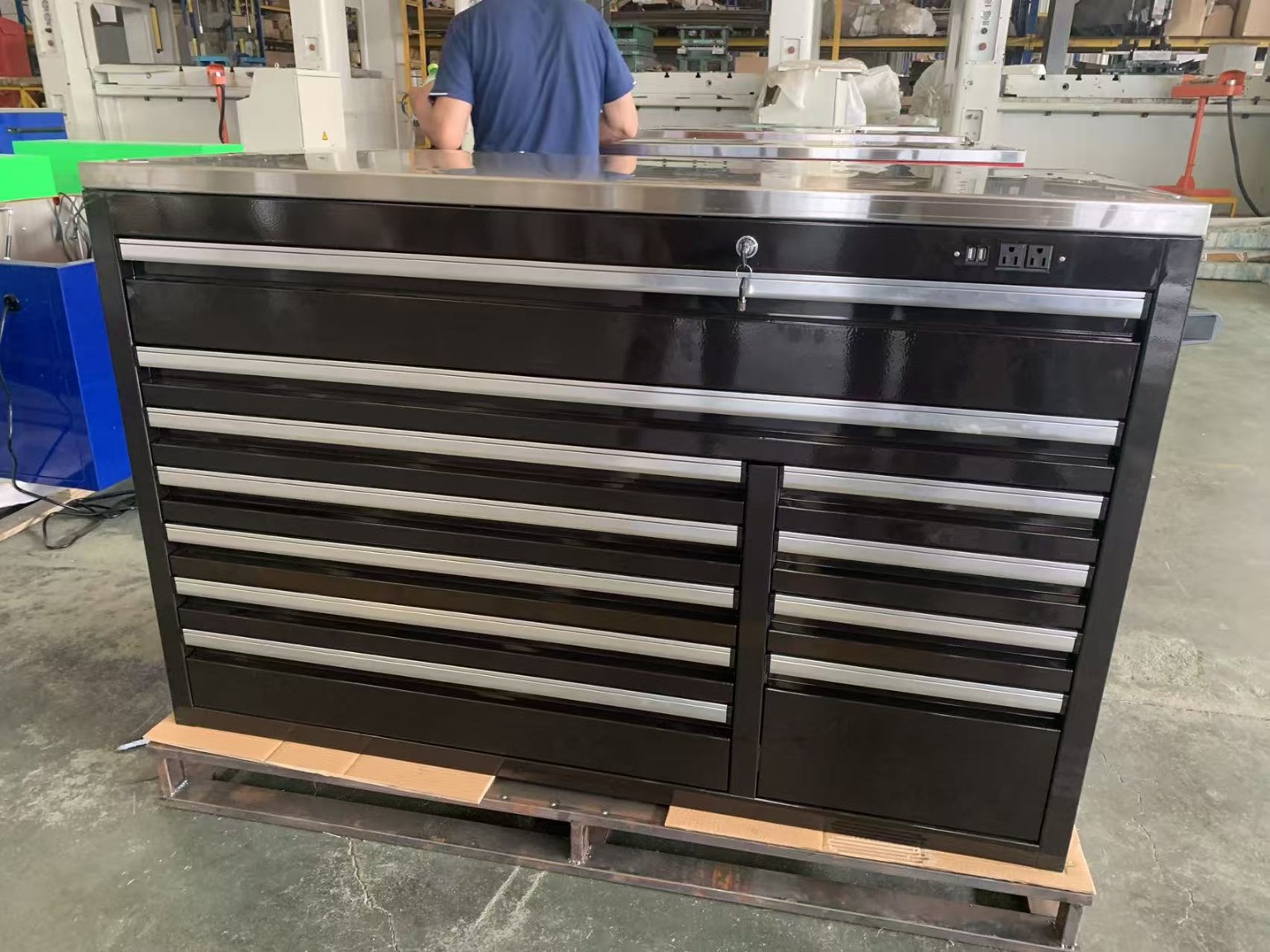
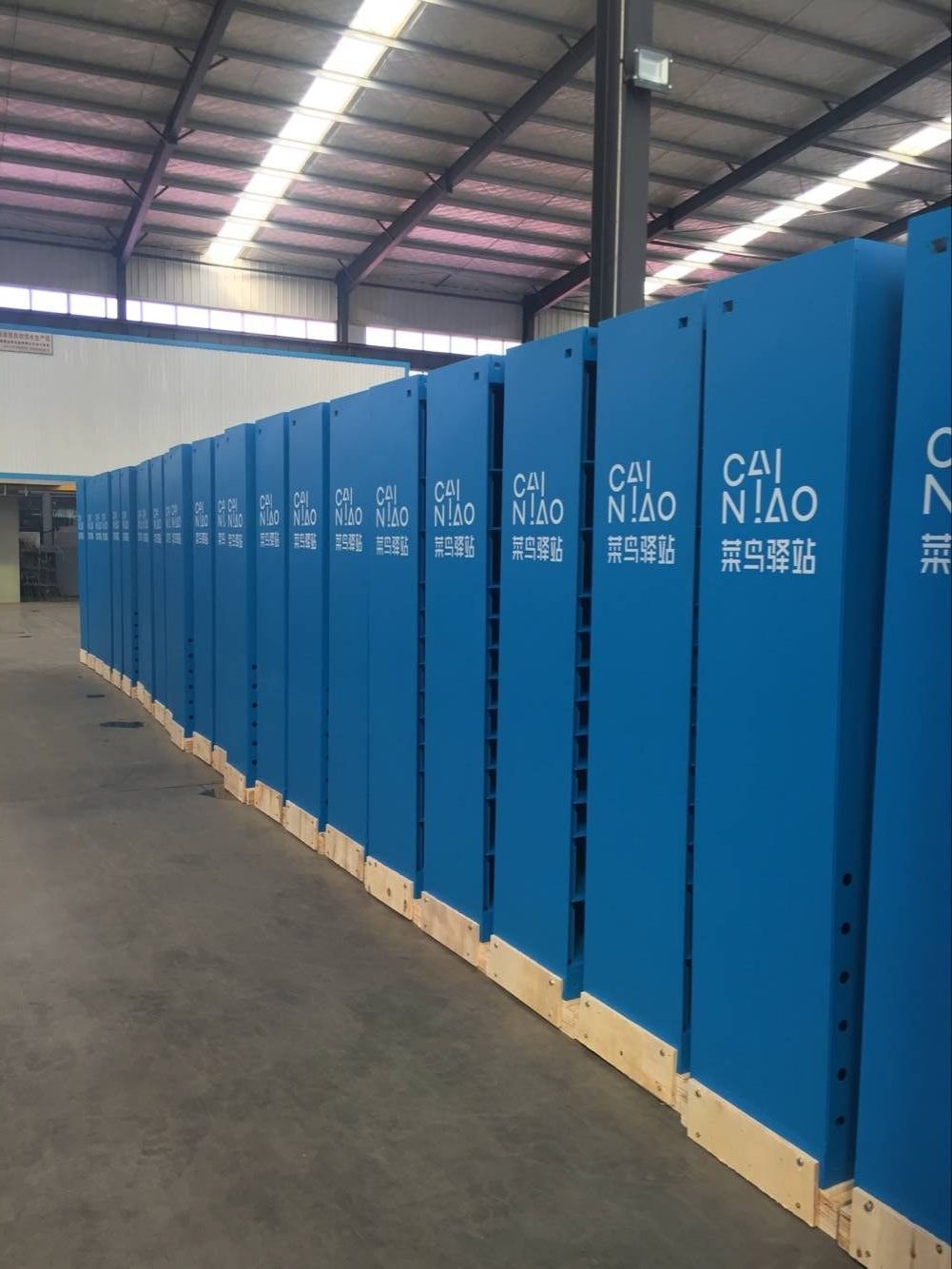
Units built on the Qingdao line — not stock photography. Bring your own drawing or a reference photo and it will be built to that.


Our factory holds IATF 16949:2016 — the automotive quality system — and produces stamped and welded metal parts with electrophoretic and spray coating for a German premium car maker. The same plant, the same stamping, welding and coating processes go into your cabinets. The certificate is in cycle 3 and runs to July 2029.
For a door up to about 2,500 mm, yes, provided it is a properly formed panel: two faces, a folded perimeter and stiffening ribs. The thickness is only half the story — an unbraced 1.2 mm panel is weaker in service than a braced one.
It is heavier — about 36 kg for the same full-height leaf — and it does not fix anything that bracing fixes. We use 1.5 mm where the structure or the duty calls for it, not as a default for doors.
Four to five per leaf, on reinforced plates, and the number is set on the drawing rather than at the fitting bench. On a split door, two hinges per leaf is normal.
That risk is real on any tall leaf, and it is managed rather than wished away: hinge count and plate reinforcement, panels that stay flat because they are braced, and a split option for the tallest doors.
Powder coat to any RAL. Matte black, the colour most garage projects specify, is routine for us.
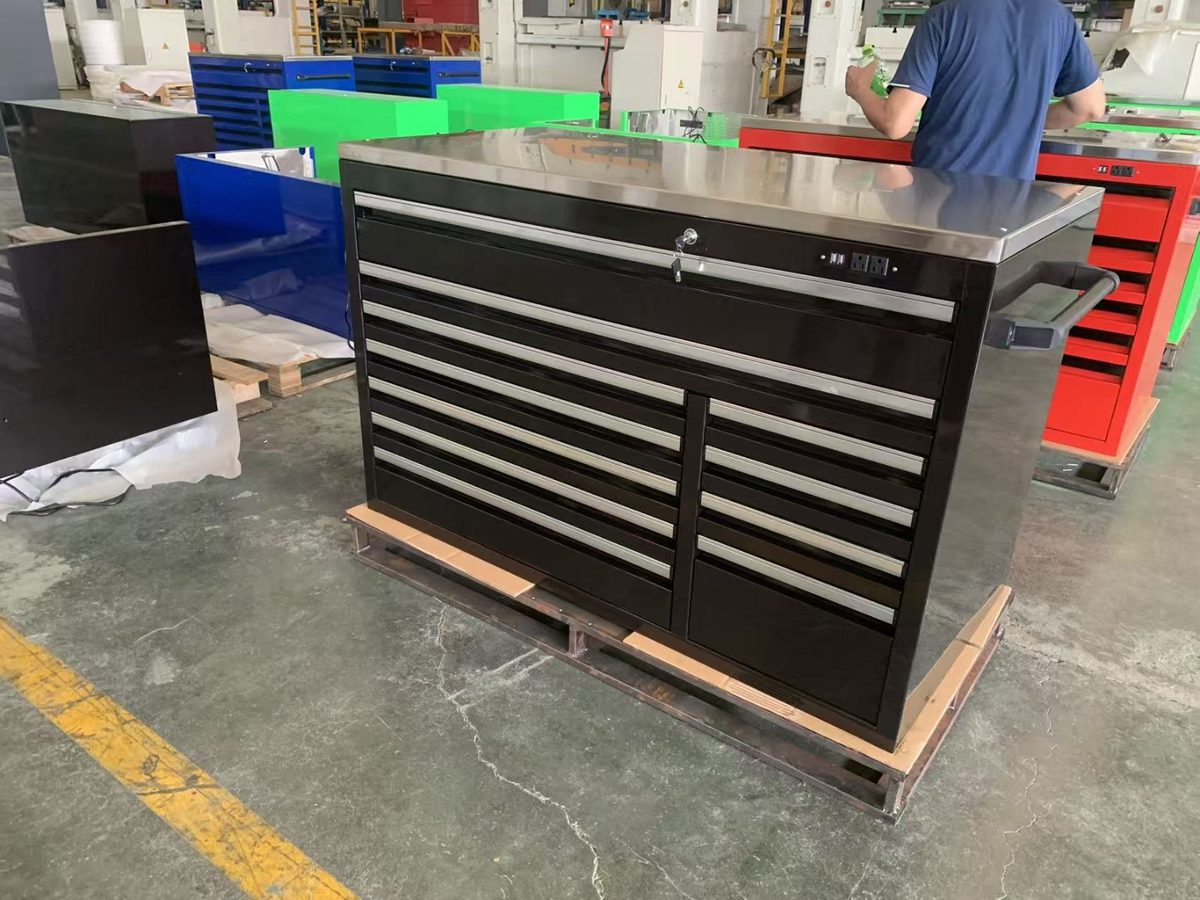
Send a drawing, a rough sketch or a photo of what you need. Tell us the destination port and the quantity you have in mind — you get a firm number, a lead time and photos of comparable builds.